
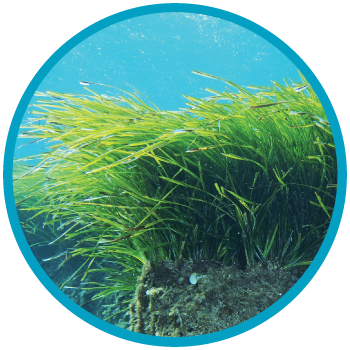





Posidonia is a flowering marine plant belonging to the Posidoniaceae family. Here is some additional information about posidonia:
1. *Appearance:* Posidonia appears as large underwater meadows composed of ribbon-like leaves that grow from an underground rhizome. The leaves are typically bright green and can reach up to one meter in length.
2. *Habitat:* Posidonia is widely distributed in the shallow coastal waters of the Mediterranean Sea and subtropical regions of the Indian Ocean and Pacific Ocean. It prefers sandy and rocky bottoms where it can firmly root.
3. *Ecology:* Posidonia meadows provide essential habitat for many marine species, including fish, crustaceans, mollusks, and echinoderms. They also play a crucial role in coastal protection by stabilizing the seabed and reducing erosion.
4. *Functioning:* Posidonia is a flowering marine plant that reproduces mainly vegetatively by emitting rhizomes that root in the marine substrate. It can also produce flowers and seeds, but this method of reproduction is less common.
5. *Threats:* Posidonia meadows face numerous threats, including coastal pollution, coastal development, destructive fishing practices, boat anchoring, and climate change. The destruction of posidonia meadows can have serious consequences for marine ecosystems and the human communities that depend on them.
6. *Protection:* Due to their ecological importance, many conservation initiatives have been implemented to protect posidonia meadows, including the creation of marine reserves, fishing regulations, and public awareness campaigns about their value.
Posidonia meadows are among the most valuable and threatened ecosystems in our oceans, and their preservation is essential for the health of marine environments and the human communities that depend on them.
Powered By 