
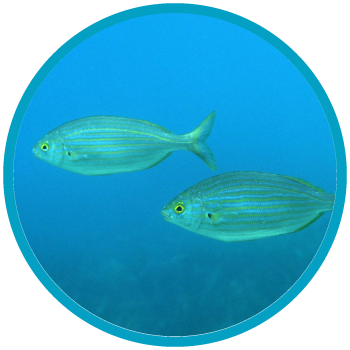





1. *Distribution:* The saupé, also known by its scientific name "Sarpa salpa," is primarily found in the Mediterranean and the Eastern Atlantic along the European and North African coasts.
2. *Habitat:* This fish favors shallow coastal waters, especially rocky and sandy bottoms. It can often be found near reefs, wrecks, and estuaries.
3. *Diet:* The saupé is an opportunistic predator, mainly feeding on small crustaceans, mollusks, marine worms, and small fish.
4. *Physical Characteristics:* The saupé has a stout, elongated body, with silver scales that give it a bluish hue. Its dorsal and anal fins are relatively long, while its mouth is equipped with sharp teeth.
5. *Reproduction:* The saupé's spawning season typically occurs in spring and summer. Eggs are laid in shallow waters, and larvae hatch after a few days.
6. *Fishing:* The saupé is an important target for fishing in many regions due to its commercial value and popularity in cuisine. It is often caught using gillnets, lines, or traps.
7. *Cuisine:* In cuisine, the saupé is prized for its tender, flavorful flesh, which is usually cooked quickly to preserve its delicate texture. It can be prepared in various ways, including grilling, pan-frying, baking, or in soup.
The saupé plays an important role in marine ecosystems as both a predator and a food source for other species. Its culinary popularity makes it a significant element of many Mediterranean cultures.
Powered By 